19 February 2026
- An innovative pilot project carried out by an Operational Group that addresses a very visible issue on retail shelves: the discoloration of sliced cooked meat products.
- Research on formulation, packaging, and lighting to ensure shelf life without compromising quality or sustainability.
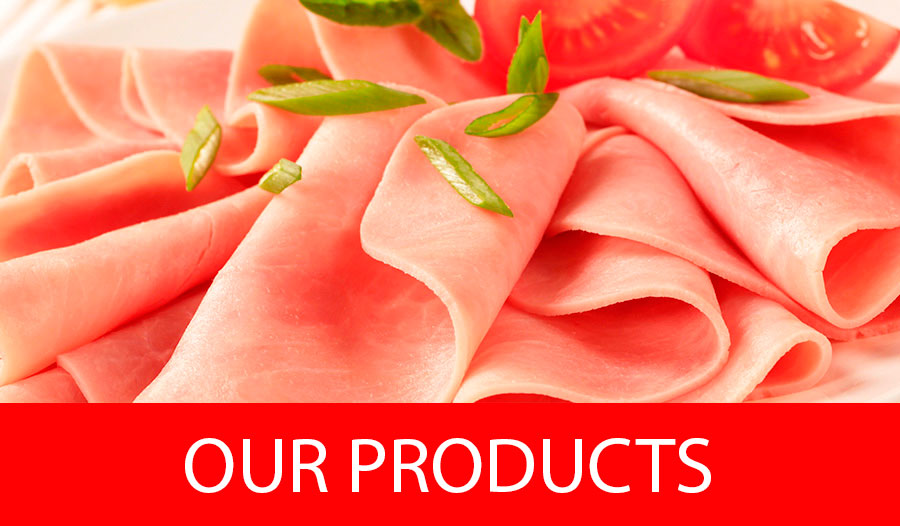
Food waste does not always begin when a product expires. It often starts much earlier, on the retail shelves, when a product suitable for consumption is removed because it “doesn’t look good enough.” In the case of packaged sliced cooked meat products, colour is a decisive factor: even slight discoloration may be enough for consumers to reject it, generating economic, food, and environmental losses.
OXICOOK is born from this starting point, an innovative pilot project currently under development that aims to understand — and minimize — the causes that lead to colour loss in sliced cooked meat products during distribution and commercial display.
A complex issue that goes beyond the product itself
The discoloration of cooked meat products is not caused by a single factor. It is the result of a combination of elements that interact throughout the entire value chain: from product formulation and the manufacturing process, to the packaging system, the presence of residual oxygen inside the pack, the type of material used, the gas-to-product ratio, the cold chain, and, finally, the lighting used at points of sale, which is currently based on LED systems.
OXICOOK builds on scientific knowledge with a comprehensive approach to address this complexity. The project analyses how light and oxygen interact with the pigment responsible for the characteristic pink color of cooked meat products, and how small imbalances can accelerate photo‑oxidation processes that damage the product’s appearance and lead to its rejection.
Current status of the project
Currently, the OXICOOK innovative pilot project is immersed in its development phase, focused on:
- Studying the critical parameters during packaging that influence color stability throughout commercial shelf life under simulated retail conditions.
- Assessing combined strategies involving formulation (ingredients with antioxidant potential and bioprotective cultures), packaging (materials, parameters, and technologies), and shelf‑display conditions to improve the stability of packaged products.
- Generating applicable and scalable knowledge for the meat and packaging industries.
All this work is carried out without losing sight of a key objective: reducing food waste without compromising the shelf life or the organoleptic properties of sliced cooked meat products.
Results achieved so far
Results obtained to date confirm that discolouration in sliced cooked meat products is caused by the combination of residual oxygen and light on retail shelves, particularly visible LED light. As opaque packaging, although an effective solution, is not accepted in the local market, the project has identified alternative strategies such as reducing residual oxygen through more effective vacuum sealing, optimising slice positioning and the gas-product ratio, and developing packaging materials with specific filters for visible light. In parallel, solutions based on oxygen scavengers and ingredients capable of stabilising colour are being assessed, with the aim of reducing waste without affecting consumer acceptance of the product.
A strategic alliance across the entire value chain
One of OXICOOK’s greatest strengths is its collaborative nature. The project is driven by a multisectoral consortium that brings together producers of cooked meat products, manufacturers of packaging materials and machinery, retail companies, research centres, and sector‑specific organisations.
The Operational Group carrying out this innovative pilot project is led by CARINSA and coordinated by the Packaging Cluster, and includes the participation of La Selva, Monells, and NOEL as beneficiary members; Enplater, TPL, Kao Chimigraf, ULMA, Bonpreu Esclat, and Ametller Origen as non‑beneficiary members; as well as the involvement of IRTA as a research centre; and the collaboration of MULTIVAC, FECIC, and Hispack in dissemination and communication activities.
This shared vision makes it possible to address the challenge of food waste from every possible angle, generating solutions with real impact and strong potential for replication in other products and sectors.
The innovative pilot project is co‑funded by the European Union, as it forms part of an Operational Group under the European Innovation Partnership for Agricultural Productivity and Sustainability (EIP‑AGRI), through grants promoted by the Department of Agriculture, Livestock, and Fisheries of the Government of Catalonia.
Towards more robust products and a more efficient distribution chain: OXICOOK moves forward with the ambition of contributing to a more efficient, sustainable, and responsible food system, where technological innovation and industrial collaboration help reduce avoidable losses and improve resource use.

Action of the CAP 2023–2027 Strategic Plan co‑funded by: